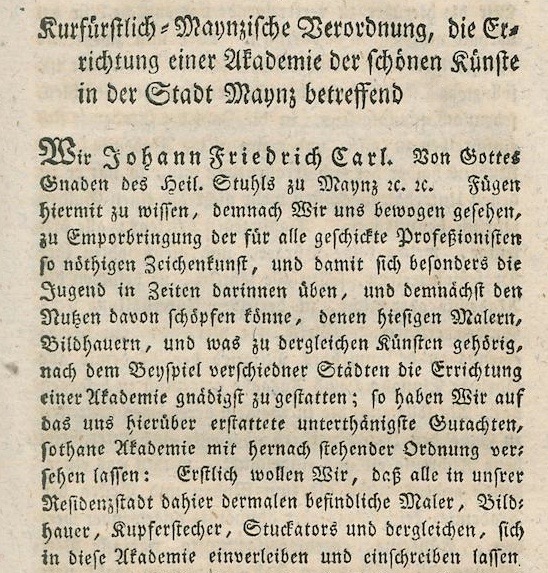
The Kunsthochschule Mainz has a varied history stretching back to 1757. Founded by Elector Johann Friedrich Karl von Ostein as an academy for painting and sculpture, it is one of the earliest institutions of its kind in the German-speaking world. However, symptomatically for its subsequent history, as early as 1785 it was replaced by a drawing academy and attached to the electoral university. After a turbulent history, the Kunsthochschule Mainz stands today as a recognised Kunsthochschule among its peers, with an exceptional model of partial autonomy within a university.
Roots in the 18th Century
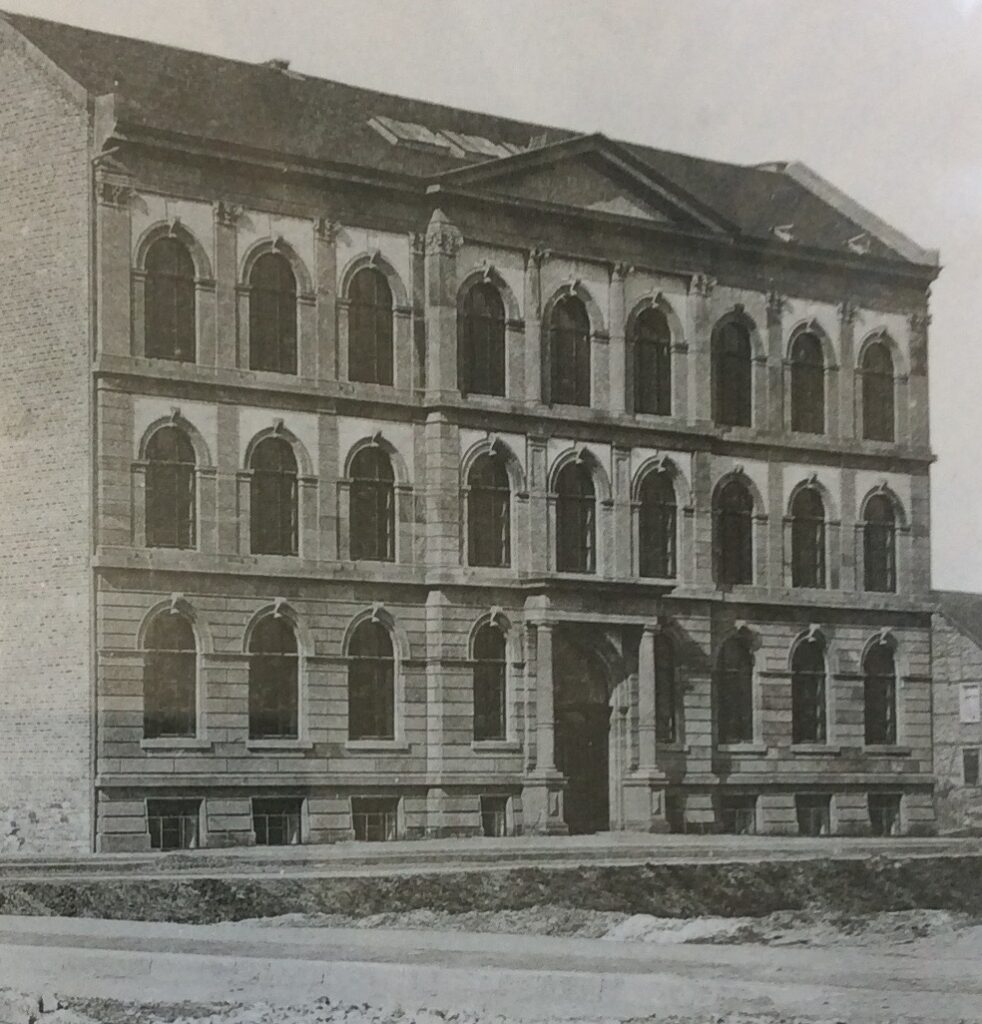
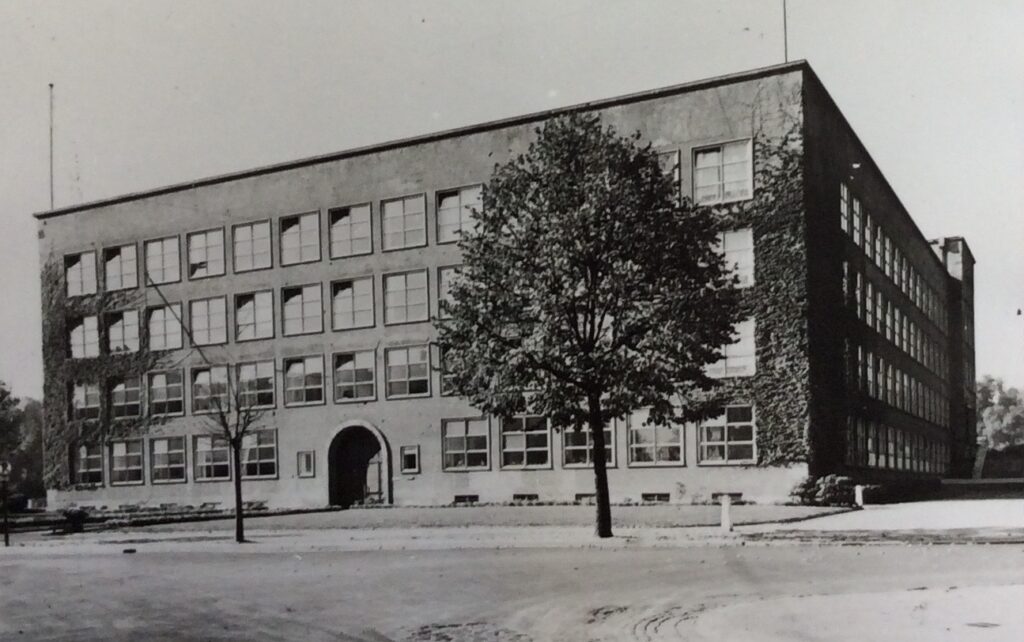
Less than half a century after its founding in 1757 and before the end of the eighteenth century, the drawing academy – by then integrated into the university – was forced to close in 1785 following the university’s dissolution under French rule. A difficult period for the arts in Mainz followed. Political upheaval and shifting regimes made continuous work and a promising new beginning impossible. Several failed private initiatives preceded the establishment of a craft drawing school in 1841, which later developed into an arts and crafts school. In the 1920s, one of the largest and most modern buildings of the time was constructed for the school. However, the continuation of its successful work was thwarted after the Nazi seizure of power. The building was taken over by the newly created State School for Art and Craft.
Turbulent Post-War Years Without an Independent Art Academy in Rhineland-Palatinate
In 1946, almost simultaneously with the reopening of Johannes Gutenberg University Mainz (JGU), a more recent history began – a complicated course through which artistic study in Mainz ultimately developed a distinct profile at the start of the 21st century. On 3 October 1946, the State School for Building and Art opened in Mainz, which is now the state capital of the newly formed federal state of Rhineland-Palatinate. However, all efforts to establish an independent college for fine and applied arts foundered due to the restrained commitment of the state and city governments and the economically difficult conditions in a devastated Mainz.
In 1956, a partial remedy was sought through the conversion of the art school into a state art school. However, all hopes of subsequent elevation to Kunsthochschule status were dashed. Students in the art teacher education programme in particular demanded recognition as a higher education institution. Instead of founding an art academy, the state art school closed in 1959. An engineering school, an applied arts school, and an independent university institute for art and craft education were established in its place. These institutions evolved into today’s Hochschule Mainz / University of Applied Sciences (formerly Fachhochschule) and Kunsthochschule Mainz. As Friedrich Gerke, the then director of the Art History Institute, summarised in 1955, there remained “particular conditions in the state of Rhineland-Palatinate, which has no academy of the arts.”
New Building for the Department of Art Education
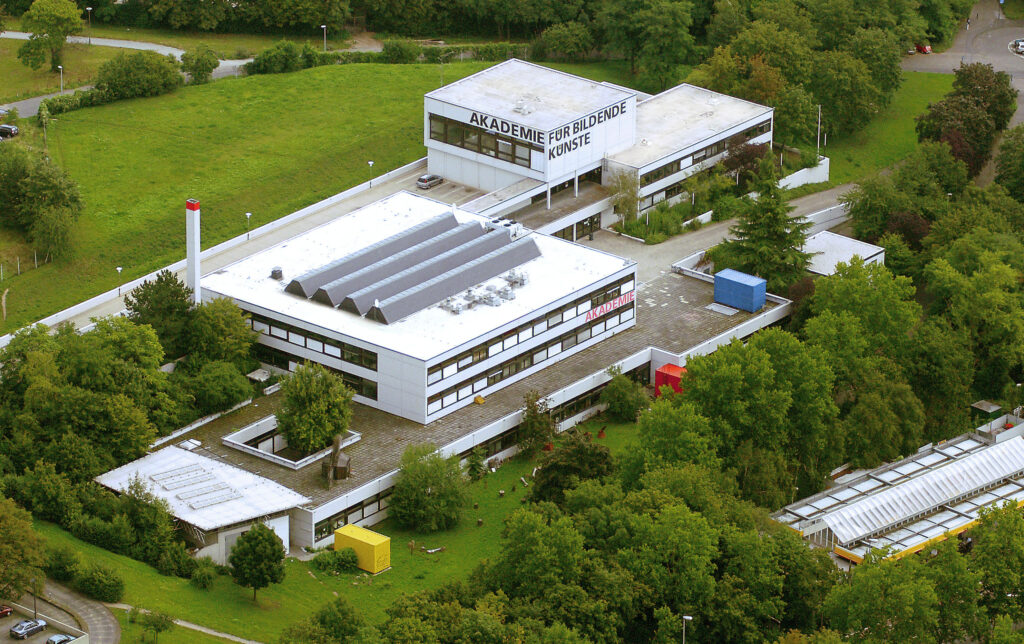
Although Rhineland-Palatinate refused to establish an art academy, the art education programme’s unique staffing conditions led to a reputation that extended beyond the region. Fourteen years later, in 1972, the university institute received its own new building on the Taubertsberg, where the Kunsthochschule Mainz is located today. Originally conceived for the university institute, the building now belongs to the university as an institute building. The new higher education law of Rhineland-Palatinate, passed in 1971, led to the institutional incorporation of the university institute as Department 24 within Johannes Gutenberg University.
However, as the university’s “Department of Art Education”, the former independence was lost – a significant disadvantage compared to competing Kunsthochschulen in other federal states. It was not until 1986 that the Fine Arts degree programme could be established, laying the foundation for the institution’s current status.
Yet the new designation “Department of Fine Arts”, alongside spatial and staffing problems, made the competitive situation more difficult at a time when other federal states were establishing independent art academies or strengthening existing ones. The changed study objectives could not be achieved within a programme primarily oriented towards teacher education.
The Special Path of Partial Autonomy: Towards Today’s Kunsthochschule
The 1990s were characterised by the gradual dismantling of craft-oriented restrictions carried over from the art school tradition and craft education. This led to far-reaching reforms achieved from within while retaining the existing institutional framework. Mainz was likely the place with the most discussions about working conditions for artistic degree programmes at that time. New courses were created, professorships were reallocated, classes were formed, and additional workshops were established. While the teaching staff had predominantly been recruited from the field of art education until the 1980s – with art-pedagogical qualifications serving as the decisive criterion for appointments – artistic profile became the primary selection criterion. In 2001, this led to the department being renamed the “Academy of Fine Arts”, which remained part of the university but was granted the special rights necessary for the arts within the framework of its partial autonomy.
Ultimately, these changes became publicly visible in 2010 with the new designation “Kunsthochschule Mainz”, as reflected in an amendment to the higher education law. Through this amendment, the state of Rhineland-Palatinate separated the departments responsible for music and fine arts from the general departmental structure and granted them the status of independent schools within the university. Their special status as partially autonomous institutions within the university is linked to a mandate for the university’s executive to transfer special rights and responsibilities to the Rector and the Kunsthochschule Council. This opened up new scope for self-governance and external representation. In 2017, the Kunsthochschule Mainz appointed an external Rector for the first time.
Following these significant paradigm shifts, the Kunsthochschule Mainz stands today as a recognised Kunsthochschule among its peers, with an exceptional model of partial autonomy within a university. It is a member of the Rectors’ Conference of Art Academies (RKK). The 2020 amendment to the higher education law further strengthens the Kunsthochschule’s status, affirming its independent, class-based structure and the distinctive nature of artistic teaching within it.